
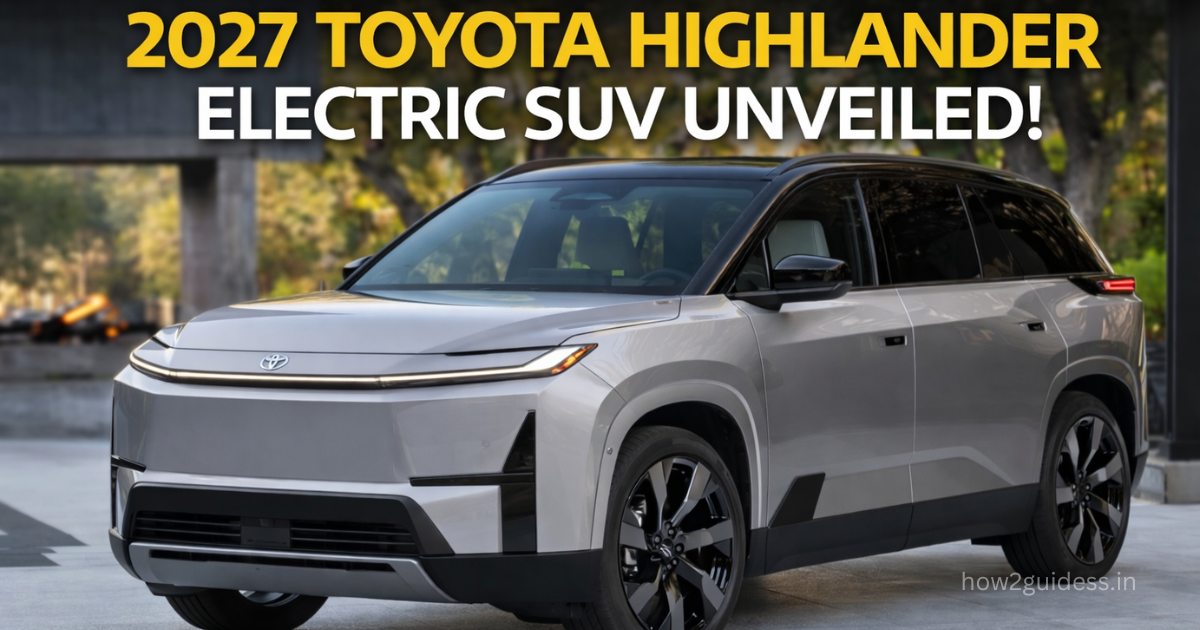
Toyota has officially taken the wraps off the 2027 Toyota Highlander Electric SUV, marking a significant shift for one of its best-known three-row nameplates. For the first time since its debut over two decades ago, the Highlander moves to a fully electric format. The new model is aimed at the North American market and is scheduled to go on sale in late 2026.
Also Read: 2026 Tata Punch EV Facelift Spotted Undisguised Ahead of February 20 Launch
First fully electric Highlander
The fifth-generation Highlander EV becomes Toyota’s first all-electric three-row SUV. Production will take place in Kentucky, underscoring Toyota’s plan to localise EV manufacturing in the US as demand for larger electric family vehicles grows.
While the electric Highlander is currently confirmed only for North America, its unveiling signals Toyota’s broader transition strategy as it gradually expands beyond hybrids into battery-electric models in higher-volume segments.
Battery options and range figures
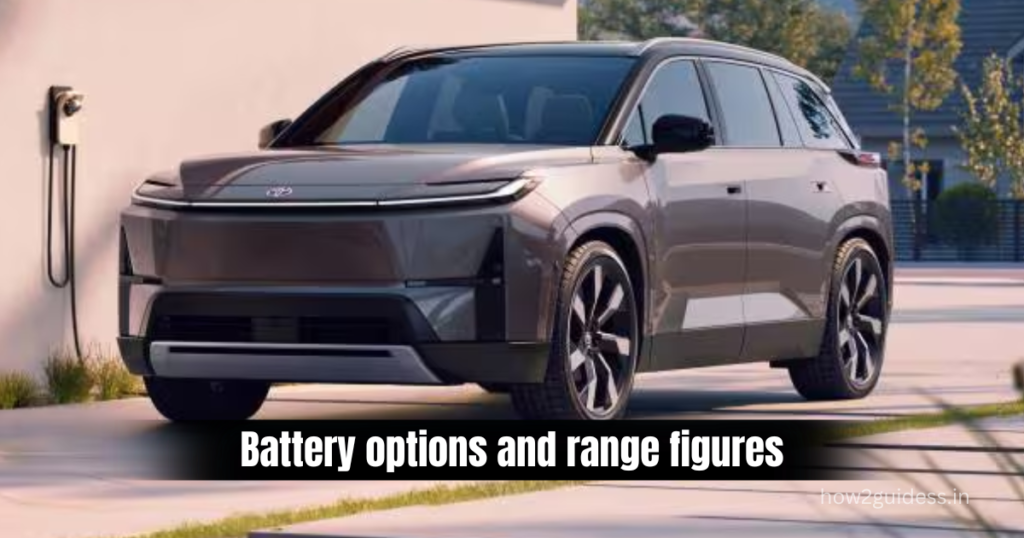
Toyota will offer the Highlander EV in XLE and Limited trims, with multiple battery and drivetrain configurations. Two battery pack options are available.
The smaller 77.0 kWh battery is standard on XLE front-wheel-drive variants, delivering an estimated range of 287 miles. The same battery paired with all-wheel drive offers a slightly lower estimated range of 270 miles. For buyers prioritising longer range, a larger 95.8 kWh battery is standard on the Limited AWD trim and optional on the XLE AWD. With this setup, Toyota claims a maximum range of up to 320 miles.
In performance terms, AWD versions produce 338 hp and 323 lb-ft of torque, while front-wheel-drive models generate 221 hp. This places the electric Highlander firmly in line with other large electric SUVs in terms of output and usability.
Charging and new technology features
One of the more notable inclusions is the factory-fitted NACS charging port, commonly referred to as the Tesla-style connector. Under ideal fast-charging conditions, Toyota claims the 2027 Toyota Highlander Electric SUV can charge from 10 percent to 80 percent in around 30 minutes.
Another first for Toyota in the US is Vehicle-to-Load (V2L) capability. This allows the Highlander EV to power external devices or act as a temporary backup power source, a feature increasingly valued in regions prone to power outages.
Interior layout and practicality
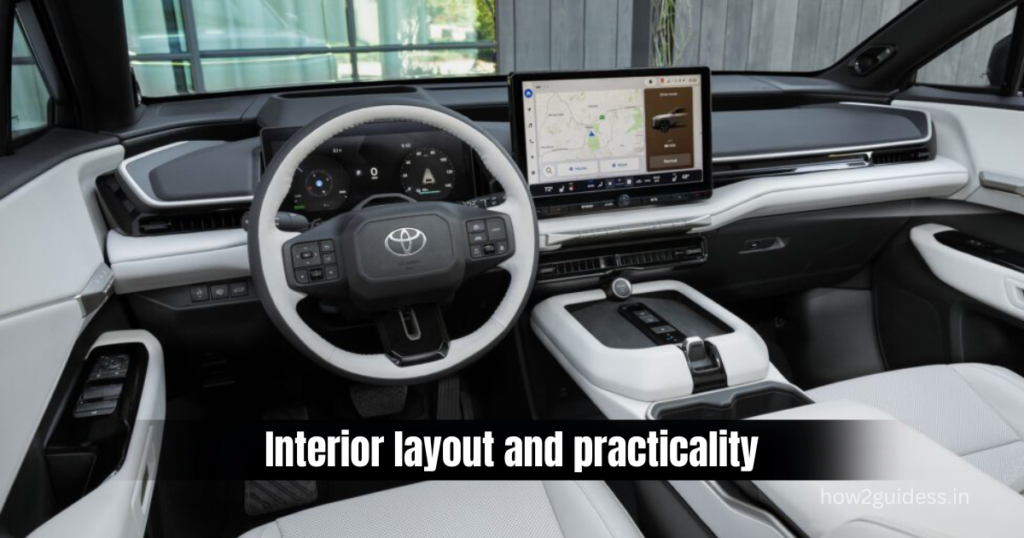
The Highlander EV retains the familiar three-row layout, with seating for up to seven occupants. Buyers can choose between second-row captain’s chairs or a bench seat, depending on configuration.
Inside, the SUV gets a 14-inch central touchscreen, a 12.3-inch digital instrument cluster, and the latest Toyota Safety Sense 4.0 driver assistance suite. Cargo space measures 15.9 cubic feet behind the third row, expanding to more than 45 cubic feet when the third row is folded flat, keeping it competitive for family use.
2027 Toyota Highlander Electric SUV Pricing & competition
Toyota has not announced official pricing yet, but industry estimates suggest a starting price between $50,000 and $55,000. This positions the Highlander EV directly against upcoming and existing electric three-row SUVs such as the Kia EV9 and Hyundai IONIQ 9.
For buyers not ready to make the shift to full electrification, Toyota has confirmed that the Grand Highlander will continue to be sold alongside the electric version with petrol and hybrid powertrains.
What this means for India
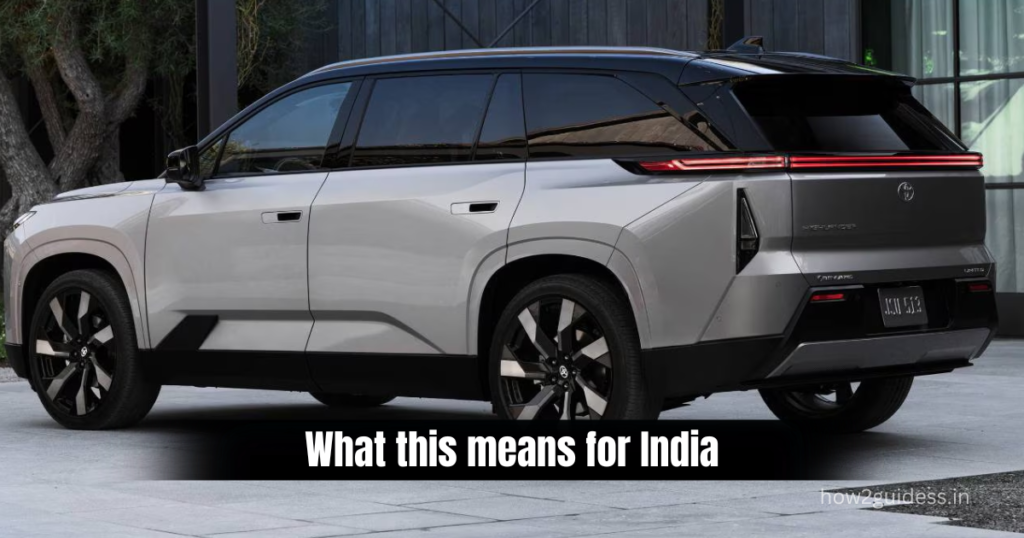
While the 2027 Toyota Highlander Electric SUV is not confirmed for India, its debut is still relevant for the Indian market. It highlights Toyota’s evolving EV roadmap and its willingness to electrify high-volume global nameplates. Lessons from this model could eventually influence future electric SUVs designed for emerging markets, including India.
Conclusion
The 2027 Toyota Highlander Electric SUV represents a cautious but clear step forward for Toyota in the global EV space. By combining familiar Highlander practicality with modern electric technology, Toyota appears to be targeting families who want to move to electric mobility without compromising space or usability.
Whether this strategy extends to markets like India remains to be seen, but the direction is now clearly defined.
Disclaimer: Details in this article are based on official manufacturer information and industry estimates available at the time of writing. Final specifications, features, pricing and market availability may change closer to launch.
Also Read: Maruti Victoris February 2026 Discounts: Up to Rs 2 Lakh Benefits Announced

Raj Prajapati is a senior automobile content writer at How2Guidess.in with over 3 years of experience in auto news, vehicle launches, comparisons, and EV updates. With a background in Computer Science & Engineering, he focuses on research-based, clear, and reader-friendly automobile content.