
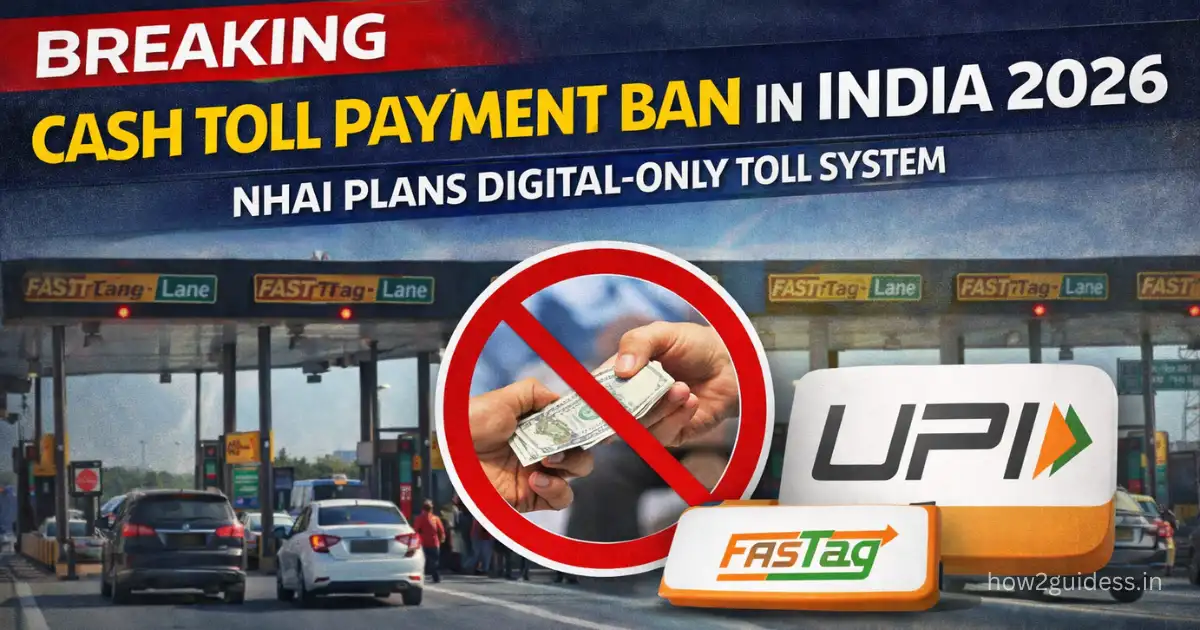
Cash Toll Payment Ban in India: The National Highways Authority of India (NHAI) is considering a nationwide ban on cash payments at toll plazas from April 1, 2026. If the proposal is cleared, all toll transactions on national highways will be conducted only through digital modes such as FASTag and Unified Payments Interface (UPI).
The move is aimed at accelerating the shift towards a fully digital tolling system and reducing delays caused by manual transactions at toll booths.
Also Read: Repeat PUC Violations May Lead to RC Cancellation, Warns Odisha Transport Minister
Cash Toll Payment Ban in India- Why NHAI Is Planning This Move
India currently has more than 1,150 operational toll plazas across its national highway and expressway network. While FASTag usage has become nearly universal, cash payments are still permitted for motorists with insufficient FASTag balance or other issues.
According to NHAI, cash transactions are one of the main reasons for congestion at toll plazas. Manual handling of cash, returning change, and disputes over toll amounts often slow down lane movement, leading to long queues during peak hours. In contrast, FASTag and UPI payments are contactless and significantly faster.
With FASTag penetration now crossing 98 percent, NHAI believes the ecosystem is mature enough to move to a completely digital model.
How Toll Charges Will Work Without Cash
At present, vehicles without a valid FASTag or with low balance are charged double the toll fee if they choose to pay in cash. If the same payment is made using UPI, the penalty is lower at 1.25 times the regular toll amount.
For example, if the standard toll fee is Rs 45, a cash-paying motorist currently ends up paying Rs 90, while a UPI payment would cost Rs 56. Eliminating cash payments altogether would remove this higher penalty and leave drivers with only FASTag or UPI as payment options.
NHAI expects this to encourage better FASTag balance management and wider use of digital payments, while also improving traffic flow through toll plazas.
Impact on Highway Users
For most highway users, the impact is expected to be minimal. With FASTag already widely adopted, regular commuters are unlikely to face disruption as long as their tags are active and sufficiently funded. However, occasional highway users and commercial drivers will need to ensure their digital payment methods are in order before entering tolled roads.
The authority has emphasised that a smooth rollout will depend on reliable digital infrastructure at toll plazas, including quick UPI processing and minimal system downtime.
FASTag Rules Also Simplified Recently
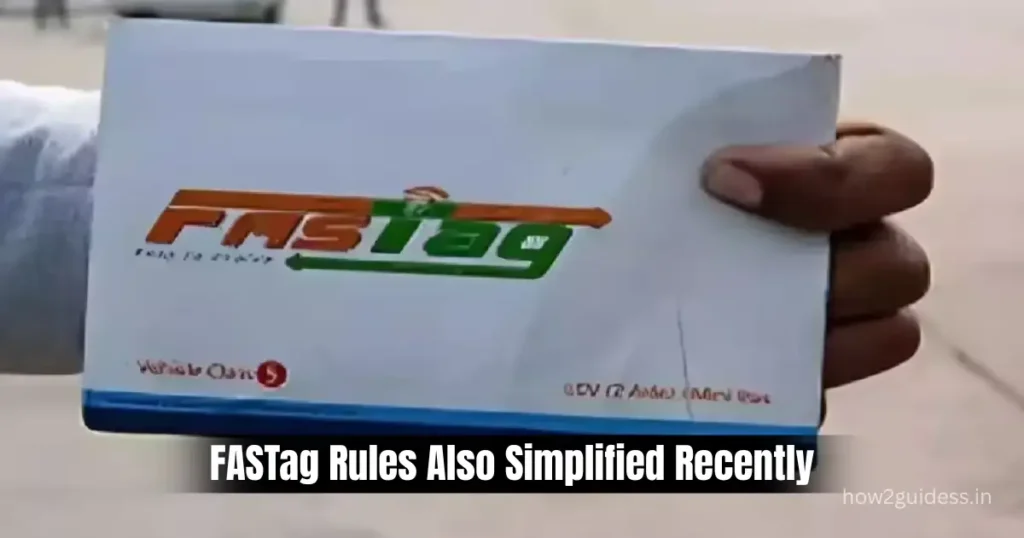
Separately, NHAI has recently scrapped the mandatory Know Your Vehicle (KYV) requirement for FASTag issuance in the car, jeep, and van category. From February 1, 2026, banks are solely responsible for verifying vehicle details during FASTag activation, making the process faster and more user-friendly.
What Happens Next
The proposed Cash Toll Payment Ban in India is part of India’s broader push towards digitisation in transport and infrastructure. While April 1, 2026 has been indicated as the target date, final approval and detailed implementation guidelines are still awaited. NHAI is expected to provide further clarity in the coming months.
Disclaimer: This report (Cash Toll Payment Ban in India) is based on official announcements and publicly available information at the time of publication. Final rules, timelines, and implementation details may change as per further notifications from NHAI or the Government of India.
Also Read: KTM Ends KISKA Partnership, Sets Up In-House Design Centre in Austria

Raj Prajapati is a senior automobile content writer at How2Guidess.in with over 3 years of experience in auto news, vehicle launches, comparisons, and EV updates. With a background in Computer Science & Engineering, he focuses on research-based, clear, and reader-friendly automobile content.