
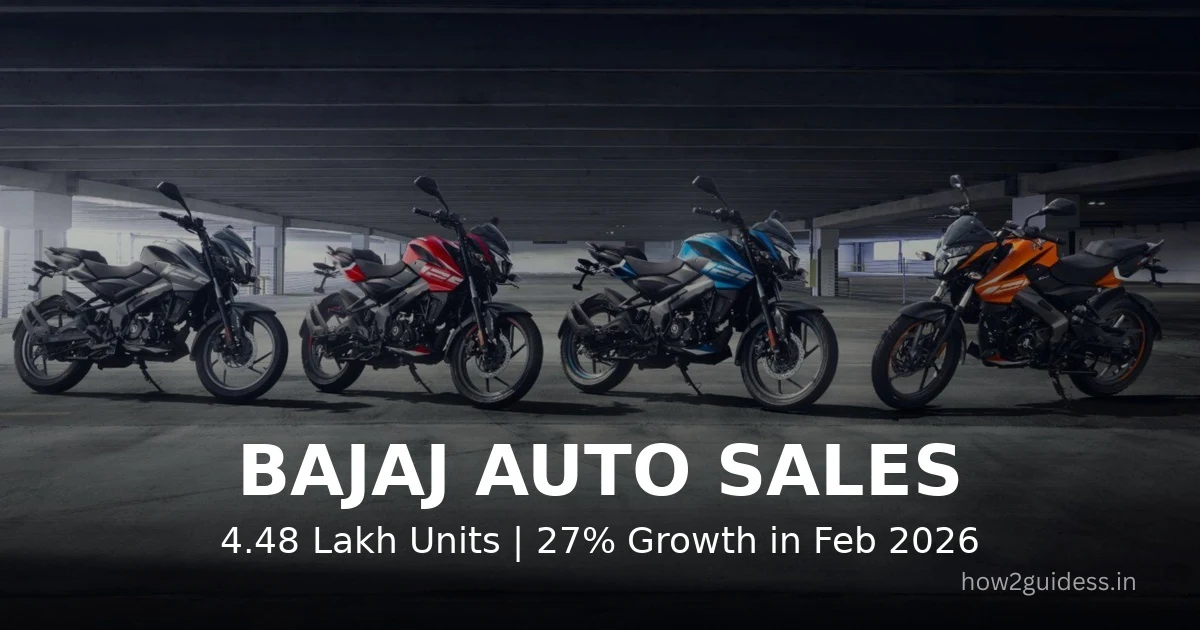
Bajaj Auto Sales February 2026: Bajaj Auto reported a strong sales performance in February 2026, posting total volumes of 4,48,259 units across two-wheelers and commercial vehicles. The figure represents a 27 percent year-on-year increase compared to 3,52,071 units sold in February 2025.
While monthly sales growth is not unusual for a major manufacturer, the scale and balance of Bajaj’s performance across domestic and export markets highlight broader shifts in the Indian two-wheeler industry.
The Bajaj Auto Sales February 2026 numbers reflect strengthening international demand, steady domestic recovery and a product strategy that continues to lean heavily on motorcycles.
Below is a closer look at the key trends behind the numbers and what they mean for the market.
Also Read: Tata Motors February 2026 Sales Analysis: 63,331 Units, Nexon and Punch Lead Growth
Two-Wheelers Continue to Drive Volume Growth
Two-wheelers remained the backbone of Bajaj’s performance in February. Combined motorcycle and scooter dispatches reached 3,79,921 units, marking a 27 percent increase over the 2,99,418 units sold during the same month last year.
The company’s domestic two-wheeler sales rose to 1,86,164 units, up from 1,46,138 units in February 2025. This improvement reflects gradually stabilising demand in the Indian market, particularly in commuter and entry-level performance segments where Bajaj has historically held strong market share.
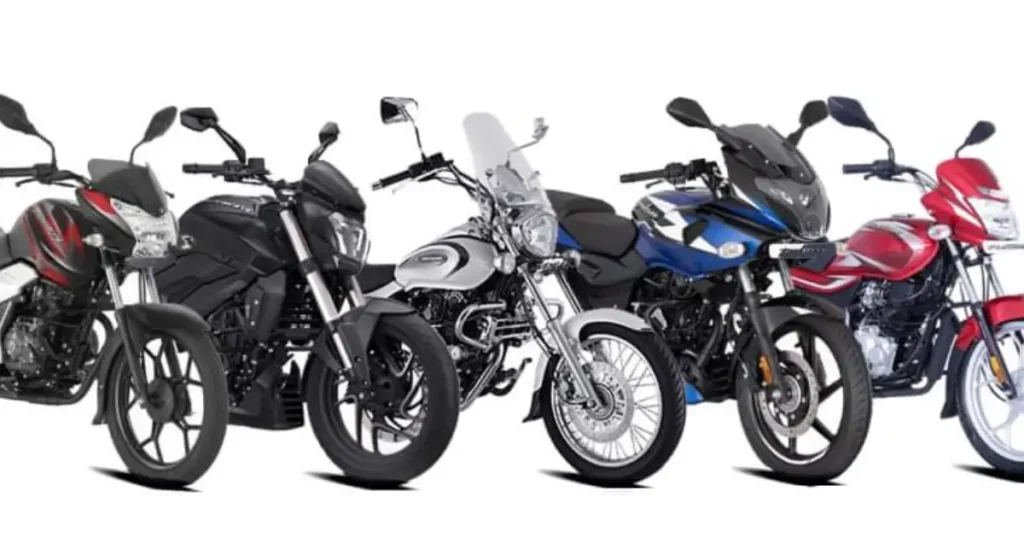
Motorcycles such as the Pulsar range and other commuter-oriented models continue to form the core of Bajaj’s domestic strategy. Demand in this category remains closely tied to rural income trends, fuel prices and financing availability.
Bajaj Auto Sales February 2026 growth suggests that consumer sentiment in these segments is stabilising after a period of uneven demand over the past two years.
For Indian buyers, the continued expansion of Bajaj’s motorcycle portfolio means greater model variety across price points. As manufacturers refresh their line-ups, competition in the entry-level performance segment is likely to intensify.
Exports Remain a Strategic Pillar
Exports played a significant role in Bajaj’s February performance. Two-wheeler shipments to international markets reached 1,93,757 units, up from 1,53,280 units in February 2025.
This 26 percent growth reflects Bajaj’s long-standing focus on overseas markets across Africa, Latin America, the Middle East and parts of South and Southeast Asia. In many of these regions, Bajaj products are positioned as durable, affordable motorcycles suited to both personal mobility and commercial use.
Exports now account for a substantial share of the company’s total volumes. For Indian manufacturers, international markets offer an important buffer against fluctuations in domestic demand. Bajaj has historically leveraged this advantage more effectively than many of its competitors.
The export momentum also highlights the global competitiveness of Indian-manufactured motorcycles. Competitive pricing, efficient manufacturing and established distribution networks allow Indian brands to maintain strong positions in emerging markets.
Also Read: Yamaha January 2026 Sales Analysis: RayZR Leads, MT-15 & Aerox Show Strong Growth
Commercial Vehicles Show Robust Momentum
Beyond motorcycles, Bajaj also reported notable growth in its commercial vehicle segment. Total CV volumes reached 68,338 units in February 2026, up 30 percent from 52,653 units during the same month last year.
Domestic commercial vehicle dispatches stood at 46,417 units, while exports climbed to 21,921 units. Export growth was particularly strong in this category, rising 43 percent year on year.

Bajaj’s three-wheeler portfolio continues to benefit from rising demand for last-mile transport and urban mobility solutions. In India, passenger and cargo three-wheelers remain important in both urban and semi-urban areas. The sector is also undergoing gradual electrification, although internal combustion models still dominate overall volumes.
The strength of Bajaj’s commercial vehicle exports also reflects demand for affordable urban mobility solutions in developing economies. Three-wheelers are widely used for both passenger transport and small-scale logistics, making them a resilient product category in many regions.
Year-To-Date Performance Shows Steady Expansion
Looking at the broader financial year, Bajaj’s cumulative volumes from April 2025 to February 2026 reached 46,72,290 units. This represents a 9 percent increase compared to 42,81,143 units during the same period in the previous financial year.
Two-wheelers accounted for the majority of this figure with 39,36,377 units, while commercial vehicle sales contributed 7,35,913 units.
Exports have played a major role in this year-to-date growth. Commercial vehicle exports surged by 52 percent during the April to February period, while overall exports increased by 21 percent.
This export-led growth strategy has helped Bajaj maintain stable volume expansion even as the Indian market goes through cyclical demand fluctuations.
Product Strategy and Upcoming Changes
Beyond the Bajaj Auto Sales February 2026 numbers, Bajaj is also preparing several product updates that could influence its market trajectory over the next year.
The Pulsar range, one of the most recognisable motorcycle line-ups in India, is expected to receive a significant update by mid-2026. Refreshing the Pulsar family is strategically important because it remains one of the brand’s strongest identity drivers in both domestic and export markets.
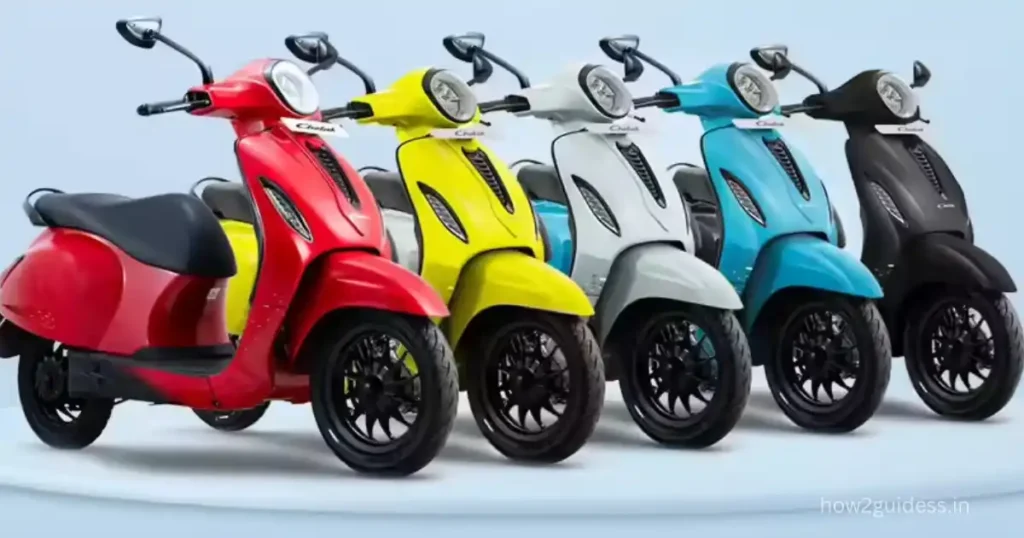
Meanwhile, performance-oriented motorcycles developed with partners are also evolving. Models from KTM and Bajaj’s own higher-capacity motorcycles such as the Dominar series may see engine capacity adjustments in the future. Such changes could help manufacturers take advantage of evolving taxation structures under potential GST revisions.
Another notable development involves entry-level performance motorcycles linked to Triumph Motorcycles. The brand’s 400 cc platform is expected to undergo adjustments aimed at improving pricing competitiveness in India.
If implemented, these displacement changes could influence pricing brackets, allowing manufacturers to position motorcycles more strategically within India’s tax and pricing structure.
What This Means for the Indian Market
Bajaj Auto Sales February 2026 performance reflects several broader trends shaping the Indian two-wheeler industry.
First, exports remain a critical growth engine for Indian manufacturers. Companies with strong global distribution networks are better positioned to sustain volume growth even when domestic demand fluctuates.
Second, mid-capacity and entry-level performance motorcycles are becoming an increasingly competitive space. Partnerships between Indian manufacturers and global brands have expanded the choices available to buyers in the 300–400 cc segment.
Third, commercial vehicles such as three-wheelers continue to play an important role in mobility and logistics, both in India and internationally. Growth in this segment indicates sustained demand for cost-effective transport solutions.
A Balanced Growth Story
Bajaj Auto Sales February 2026 highlights the balanced nature of Bajaj’s business model. Growth has come not only from domestic motorcycle demand but also from strong export performance and expanding commercial vehicle volumes.
For the wider Indian auto industry, this reinforces the importance of diversification across product segments and geographic markets.
Looking ahead, upcoming product updates and regulatory adjustments could shape the competitive landscape further.
If Bajaj successfully refreshes key product lines while maintaining export momentum, the company is likely to remain a significant force in both the Indian and global two-wheeler markets.
Disclaimer: Bajaj Auto Sales February 2026 figures mentioned in this article are based on the official monthly dispatch data released by the manufacturer. Dispatch numbers represent vehicles sent to dealers or export markets and may differ from actual retail sales recorded during the same period.
Also Read: Raptee.HV T30 Deliveries Begin in India at Rs 2.39 Lakh; Chennai First Market

Raj Prajapati is a senior automobile content writer at How2Guidess.in with over 3 years of experience in auto news, vehicle launches, comparisons, and EV updates. With a background in Computer Science & Engineering, he focuses on research-based, clear, and reader-friendly automobile content.