
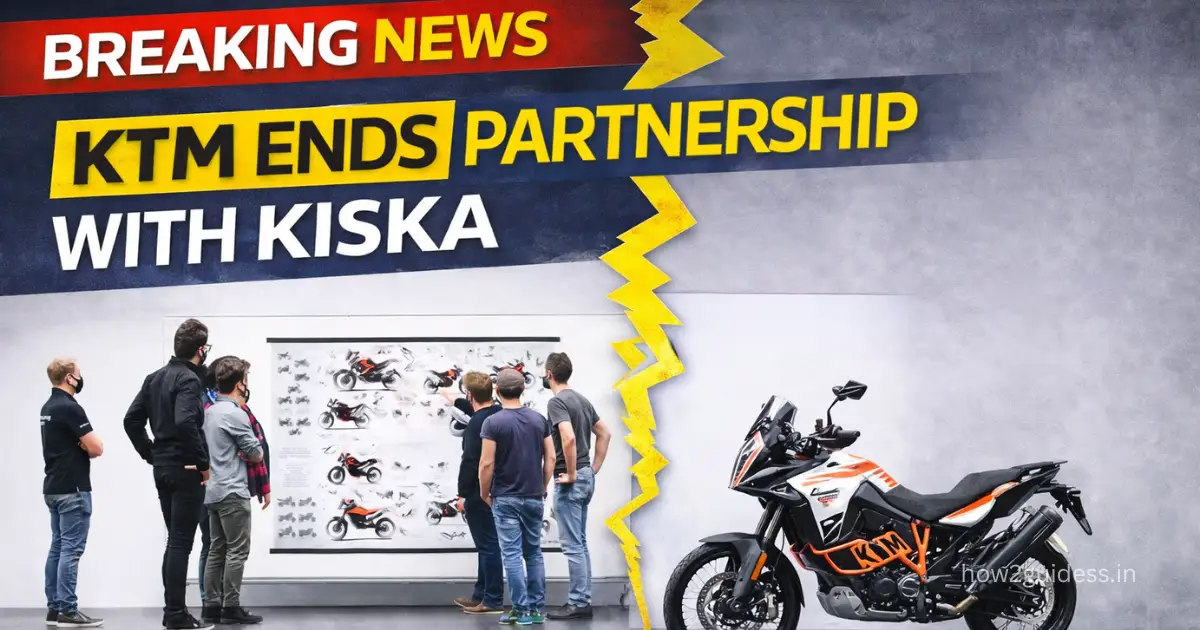
KTM Ends KISKA Partnership: KTM has formally ended its decades-long ownership relationship with Austrian design agency KISKA, marking a major shift in how the motorcycle manufacturer will handle product and brand design going forward.
The company has sold all its remaining shares in KISKA to technology firm Loxone GmbH, bringing an end to a collaboration that shaped KTM’s visual identity for more than 30 years.
The decision comes amid wider restructuring following Bajaj Auto’s acquisition of Pierer Mobility AG, KTM’s parent group.
Also Read: Royal Enfield Himalayan 450 Side Stand Updated, New Design Priced at Rs 3,250
KTM Ends KISKA Partnership
KISKA has been closely associated with KTM since the late 1980s and early 1990s, playing a central role in defining the brand’s sharp, aggressive design language. Beyond motorcycles, the agency contributed to KTM’s broader brand ecosystem, including graphics, apparel, communication strategy and customer experience design.
At its peak, Pierer Mobility AG held up to 50 percent of KISKA’s shares, making KTM not just the agency’s largest client but also a major investor. Over the years, KISKA also worked on projects for other global brands, but KTM remained its most significant partner.
With the latest transaction, Loxone GmbH will now hold a 71 percent stake in KISKA, while the remaining 29 percent will stay with the agency’s management and executive leadership.
Restructuring After Bajaj Takeover
The separation is part of broader structural changes following Bajaj Auto’s takeover of Pierer Mobility AG. As KTM reassesses its internal operations, design has been identified as a function the company wants to bring closer to its core decision-making.
KTM has confirmed that it will establish a new in-house design centre in Salzburg. This facility will operate independently of KTM’s existing development and engineering base in Mattighofen, with the aim of streamlining the design process and improving coordination between design, engineering and product planning teams.
Impact on KISKA and Workforce
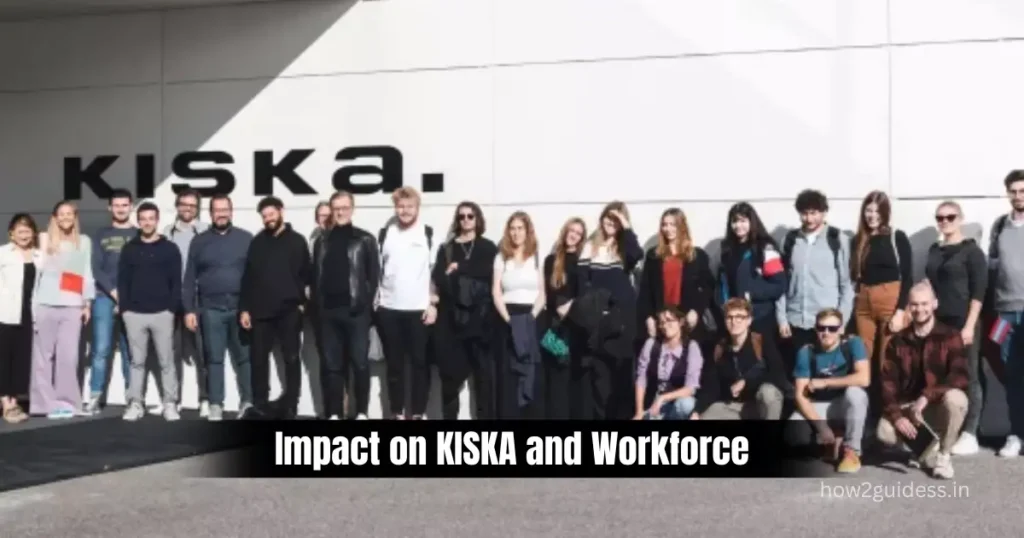
KISKA managing director and co-owner Julian Herget acknowledged that the agency’s reliance on KTM had become a vulnerability. He stated that KTM’s rapid growth as a client eventually created an unhealthy dependency, which became evident during KTM’s bankruptcy proceedings.
As part of that downturn, 42 employees were laid off at KISKA. Herget noted that while the agency had been growing steadily, the imbalance in its client portfolio posed long-term risks. Under Loxone’s majority ownership, KISKA intends to diversify its customer base and avoid dependence on a single brand going forward.
What This Means for KTM Customers
In the short term, KTM customers are unlikely to see immediate visual changes. Motorcycle development cycles typically span several years, and upcoming models will still reflect design philosophies shaped during the KISKA era. KTM has indicated that its core design identity will continue, even as design work transitions fully in-house.
Over time, however, KTM’s new internal design centre could influence how future models evolve, especially as the company aligns design more closely with engineering, cost control and market-specific requirements.
For now, the move signals a strategic shift rather than an abrupt change in KTM’s product appearance or positioning.
Disclaimer: Details mentioned (KTM Ends KISKA Partnership) in this article are based on official announcements and publicly available information at the time of publishing. Product plans and corporate decisions may change without prior notice.
Also Read: Kawasaki Road to the Himalayas Programme Announced, Training Starts April 2026

Raj Prajapati is a senior automobile content writer at How2Guidess.in with over 3 years of experience in auto news, vehicle launches, comparisons, and EV updates. With a background in Computer Science & Engineering, he focuses on research-based, clear, and reader-friendly automobile content.