

Maruti Suzuki Sales January 2026: January 2026 marked an unusual phase for Maruti Suzuki. While the company retained its position as India’s largest carmaker, its sales performance stood in sharp contrast to rivals such as Tata Motors and Mahindra, both of which posted strong growth.
Maruti Suzuki’s volumes remained largely flat year-on-year, resulting in a noticeable dip in market share and raising questions about changing demand patterns within its portfolio.
Also Read: Skoda Kylaq Sales January 2026 Drive Growth as Volkswagen Volumes Decline
Overall performance: volumes stable, share declines
Maruti Suzuki sold 1,74,529 passenger vehicles in January 2026, a marginal 1 percent increase over January 2025. However, market share dropped to 38.6 percent, down from 43.2 percent a year earlier.
This decline is significant because it suggests that while Maruti’s absolute numbers held steady, competitors grew at a much faster pace, reshaping the competitive landscape.
The data indicates that Maruti Suzuki’s breadth continues to provide volume stability, but growth momentum is uneven across segments and models.
Maruti Suzuki Sales January 2026- Model-wise snapshot
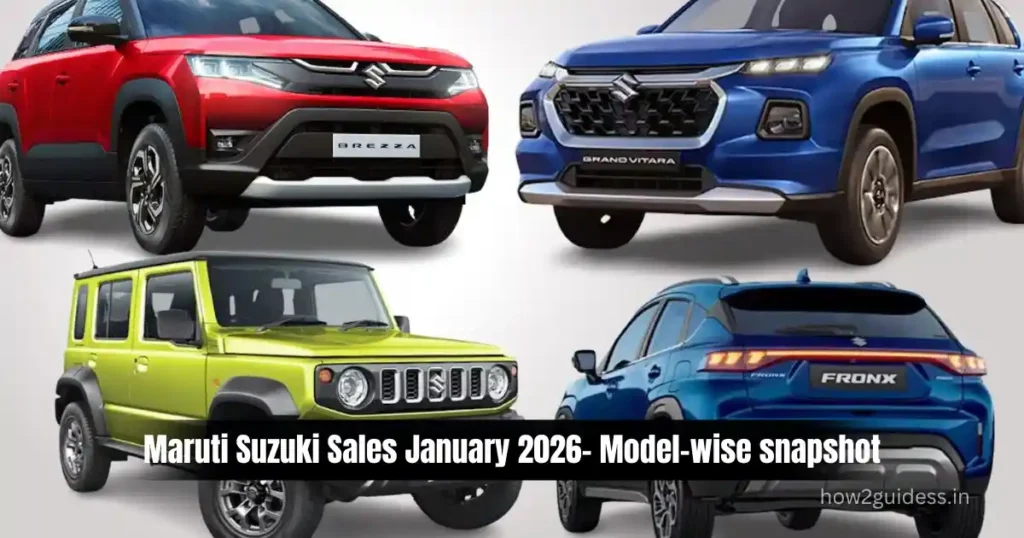
Maruti Suzuki Model-wise Sales: January 2026 vs January 2025
| Model | Jan 2026 | Jan 2025 | YoY Change |
|---|---|---|---|
| Dzire | 19,629 | 15,383 | +28% |
| Ertiga | 17,892 | 14,248 | +26% |
| Swift | 17,806 | 17,081 | +4% |
| Brezza | 17,486 | 14,747 | +19% |
| Baleno | 16,782 | 19,965 | -16% |
| Victoris | 15,240 | NA | – |
| Wagon R | 15,118 | 24,078 | -37% |
| Fronx | 13,353 | 15,192 | -12% |
| Alto | 12,314 | 11,352 | +8% |
| Eeco | 11,914 | 11,250 | +6% |
| Grand Vitara | 7,030 | 15,784 | -55% |
| XL6 | 3,820 | 4,403 | -13% |
| Jimny | 591 | 163 | +263% |
| Ignis | 1,902 | 3,780 | -50% |
| Celerio | 1,501 | 1,954 | -23% |
| S-Presso | 1,954 | 2,895 | -33% |
| Invicto | 197 | 556 | -65% |
| Total | 1,74,529 | 1,73,599 | +1% |
Callout: The table shows a clear split between strong performers like Dzire and Ertiga, and several high-volume models that are now in decline.
Dzire and Ertiga anchor Maruti’s volumes
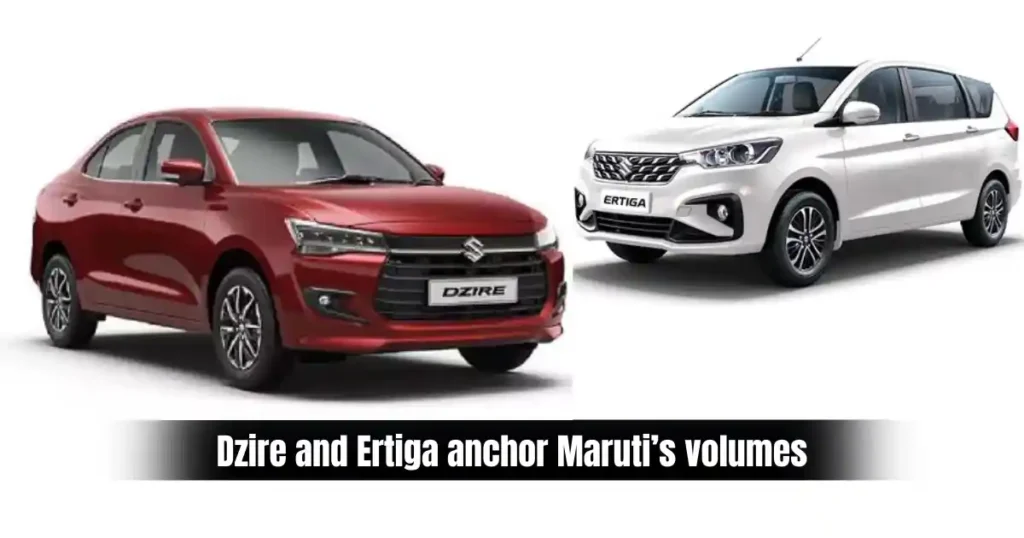
The Dzire emerged as Maruti Suzuki’s best-selling model in January 2026, posting 19,629 units and a robust 28 percent year-on-year growth. This underlines the continued relevance of compact sedans in fleet, taxi and value-focused private buyer segments.
The Ertiga followed closely with 17,892 units, up 26 percent. Its consistent growth highlights sustained demand for affordable MPVs, particularly among large families and commercial users. Together, these two models played a critical role in offsetting declines elsewhere in the lineup.
Mixed fortunes for core hatchbacks
Maruti’s traditional stronghold—hatchbacks—showed signs of stress. The Swift recorded modest growth of 4 percent, indicating stable but saturated demand. In contrast, the Baleno declined by 16 percent, reflecting intensifying competition in the premium hatchback space and possible cannibalisation from crossovers.
The Wagon R’s 37 percent drop is particularly notable. Once a backbone of Maruti’s volumes, its decline suggests shifting buyer preferences away from tall-boy hatchbacks toward compact SUVs and crossovers.
SUVs and crossovers: internal reshuffle underway
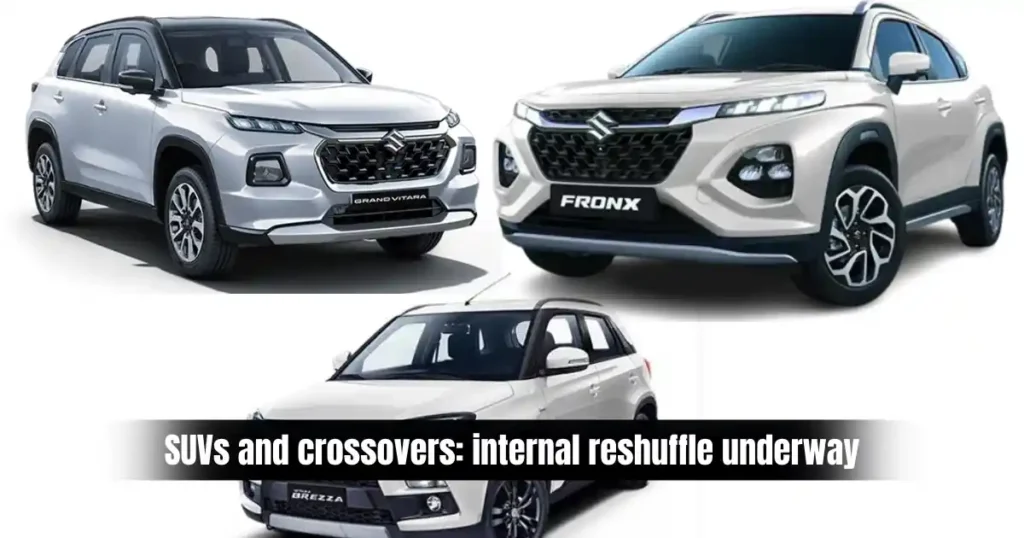
The Brezza delivered a healthy 19 percent growth, reinforcing its position as Maruti’s most stable compact SUV. However, the broader SUV picture reveals internal redistribution rather than net growth.
The Grand Vitara’s sales fell sharply by 55 percent, dropping to 7,030 units. Much of this decline appears linked to the arrival of the Victoris, which posted a strong 15,240 units in its first full month on sale. This indicates cannibalisation within Maruti’s own SUV portfolio, as buyers migrate toward newer offerings.
The Fronx also saw a 12 percent decline, suggesting that the initial novelty of coupe-style crossovers may be wearing off.
Entry-level models lose relevance
Lower-end models such as the S-Presso, Ignis and Celerio continued to decline, with drops ranging from 23 to 50 percent. These trends reflect rising entry prices, stricter regulations and changing buyer expectations, which are gradually eroding demand in the budget hatchback segment.
The Alto and Eeco were exceptions, posting modest growth, largely driven by rural demand and commercial usage.
Niche models: growth without scale
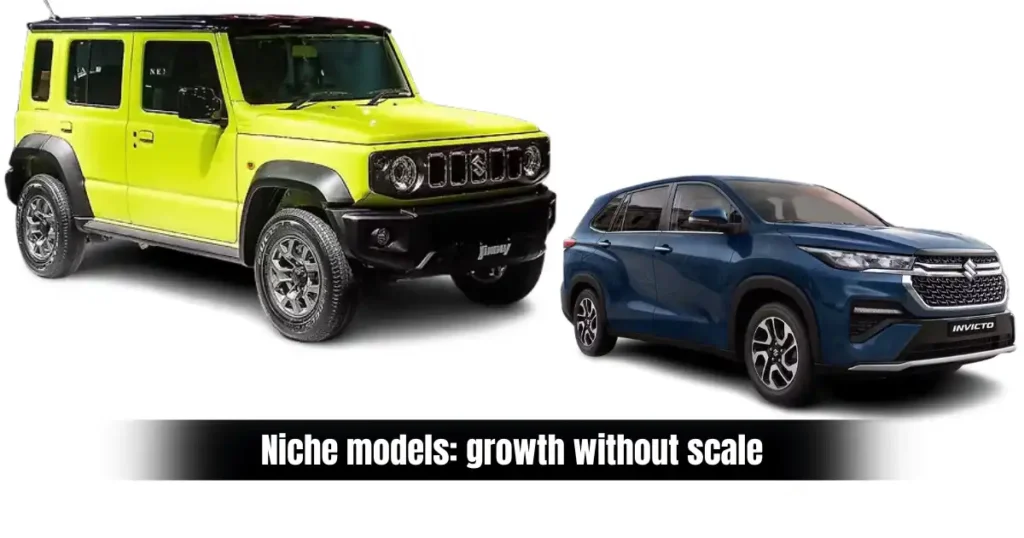
The Jimny recorded a 263 percent growth rate, but volumes remained low at 591 units. While this suggests growing awareness and niche acceptance, it does little to influence Maruti’s overall performance. Similarly, the Invicto’s steep decline highlights the challenges Maruti faces in sustaining premium MPV volumes.
What this means for the Indian market
Maruti Suzuki’s January numbers underline a transition phase. The company continues to rely heavily on a few proven nameplates while struggling to extract growth from newer segments at the same pace as rivals.
Flat volumes combined with falling market share indicate that leadership alone is no longer enough in a market increasingly driven by SUVs, feature-rich offerings and fresh platforms.
Conclusion- Maruti Suzuki Sales January 2026
Maruti Suzuki Sales January 2026 shows Maruti Suzuki holding ground rather than gaining it. Strong performances from Dzire, Ertiga and Brezza provided stability, but widespread declines across hatchbacks and internal cannibalisation within SUVs diluted overall momentum.
As competitors accelerate growth, Maruti’s challenge will be to convert its vast portfolio strength into renewed expansion, rather than mere volume defence, in the months ahead.
Disclaimer: Sales figures and analysis in this article are based on manufacturer-released data and publicly available information. Monthly performance may vary depending on dispatch cycles, stock availability and market conditions.
Also Read: Global EV Sales Fall 3% in January 2026 as China and US Demand Slows

Raj Prajapati is a senior automobile content writer at How2Guidess.in with over 3 years of experience in auto news, vehicle launches, comparisons, and EV updates. With a background in Computer Science & Engineering, he focuses on research-based, clear, and reader-friendly automobile content.