
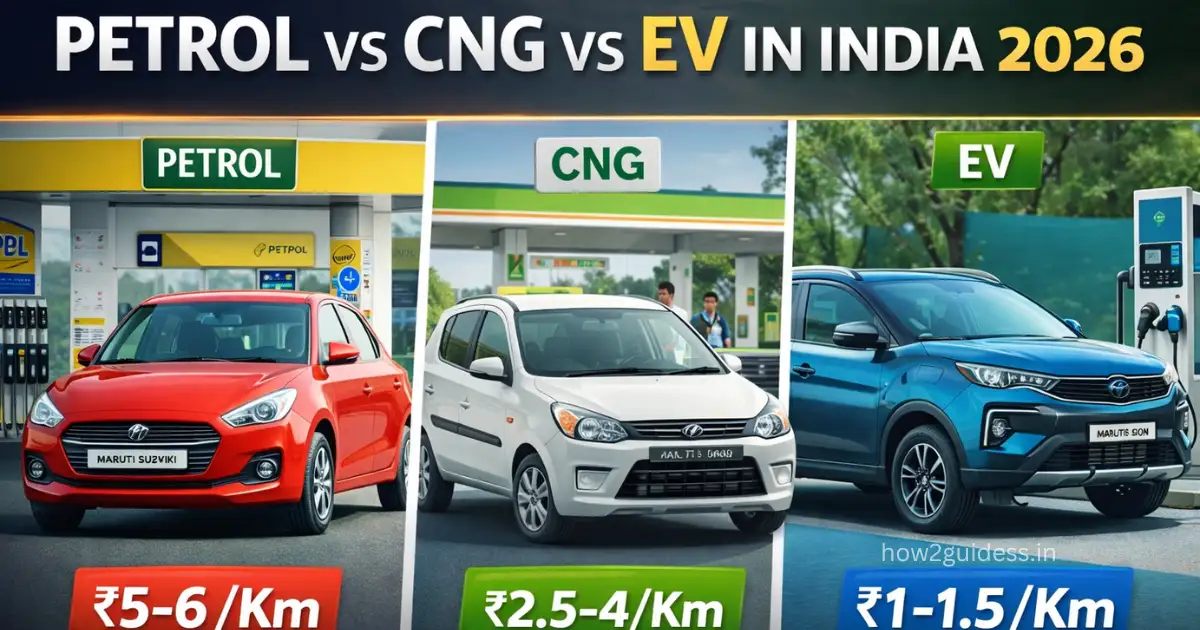
Petrol vs CNG vs EV: Choosing a new car in India in 2026 has become more complicated than ever. A decade ago, the biggest debate was usually petrol vs diesel. Today, buyers must also consider CNG and electric vehicles (EVs).
Each option promises lower running costs or better practicality, but the right choice depends on how you drive, where you live, and how long you plan to keep the vehicle.
Some drivers swear by diesel for long highway trips, while others praise EVs for their ultra-low running costs. Meanwhile, many urban families continue to rely on CNG to keep monthly fuel bills manageable. The reality is that no single fuel type is universally the best choice. Instead, the ideal option depends on your usage pattern and priorities.
This guide breaks down the real ownership costs of Petrol vs CNG vs EV cars in India in 2026, helping buyers understand which option makes the most financial sense.
Also Read: 2026 Kia Sonet Launched With Diesel Automatic And Turbo DCT Under Rs 10 Lakh
The Most Important Number: Petrol vs CNG vs EV Cost Per Kilometre
When comparing fuel types, the single most useful metric is running cost per kilometre. This figure represents how much you spend on energy or fuel to drive one kilometre.
Based on typical fuel prices and real-world mileage in India during 2026, the approximate running costs are as follows.
| Fuel Type | Cost Per Km | Monthly Cost (1500 km) | Yearly Cost |
|---|---|---|---|
| Petrol | ₹4.75 – ₹5.50 | ₹7,125 – ₹8,250 | ₹85,500 – ₹99,000 |
| Diesel | ₹3.60 – ₹4.20 | ₹5,400 – ₹6,300 | ₹64,800 – ₹75,600 |
| CNG | ₹2.28 – ₹2.80 | ₹3,420 – ₹4,200 | ₹41,040 – ₹50,400 |
| Electric (Home Charging) | ₹1.00 – ₹1.50 | ₹1,500 – ₹2,250 | ₹18,000 – ₹27,000 |
| Electric (Fast Charging) | ₹3.00 – ₹4.00 | ₹4,500 – ₹6,000 | ₹54,000 – ₹72,000 |
The numbers reveal one clear trend: electric cars are the cheapest to run, followed by CNG, then diesel, while petrol remains the most expensive fuel option.
However, running cost is only one part of the ownership equation. Purchase price, maintenance, practicality and infrastructure availability also matter.
Petrol Cars: The Most Practical Everyday Option
Despite higher fuel costs, petrol cars remain extremely popular in India. The biggest reason is simplicity and accessibility.
Petrol pumps are available virtually everywhere in the country, from large metro cities to small rural towns. This means drivers never have to worry about refuelling availability.
Advantages of Petrol Cars
Petrol vehicles offer several practical benefits:
- Lowest purchase price across most segments
- Smooth and refined engine performance
- Easy availability of fuel nationwide
- No charging infrastructure dependency
- No reduction in boot space
These factors make petrol vehicles particularly attractive for buyers who want a simple ownership experience without complications.
Disadvantages of Petrol Cars
However, petrol vehicles also have clear drawbacks:
- Highest running cost among all fuel types
- Rising petrol prices increase monthly expenses
- Not financially efficient for high mileage drivers
For example, someone driving 1,500 km per month may spend ₹7,000–₹8,000 on petrol, which is significantly higher than CNG or electric alternatives.
Who Should Buy Petrol Cars?
Petrol cars are best suited for buyers who:
- Drive less than 10,000 km per year
- Prefer lower upfront purchase price
- Frequently travel in rural areas or highways
- Want a hassle-free ownership experience
For such users, the higher running cost may not be significant enough to justify investing in a more expensive CNG or electric car.
Diesel Cars: The Long-Distance Champion

Diesel engines used to dominate the Indian car market because of their strong mileage and torque. While their popularity has declined slightly due to stricter emission regulations, diesel vehicles remain highly relevant for certain types of drivers.
Advantages of Diesel Cars
Diesel engines offer several key benefits:
- Better fuel efficiency for highway driving
- Strong torque for overtaking and carrying heavy loads
- Lower running cost than petrol
- Ideal for SUVs and large vehicles
Many popular SUVs such as the Mahindra Scorpio N, Tata Safari and Hyundai Creta still offer diesel variants because they provide the performance and efficiency required for long-distance travel.
Disadvantages of Diesel Cars
However, diesel cars also have some limitations:
- Higher purchase price compared to petrol versions
- Slightly higher maintenance costs
- Noisier engine operation
- Regulatory uncertainty in some metro cities
For example, diesel vehicles in Delhi NCR face age restrictions, which could affect long-term ownership plans.
Who Should Buy Diesel Cars?
Diesel vehicles are ideal for drivers who:
- Travel more than 1,500–2,000 km per month
- Frequently drive on highways
- Prefer larger SUVs or MPVs
- Want strong pulling power and better mileage
If most of your driving happens on highways or involves heavy vehicles, diesel still remains a sensible option.
Also Read: Renault Bigster Spied Testing Again In India Ahead Of 2026 Debut
CNG Cars: The Urban Money Saver
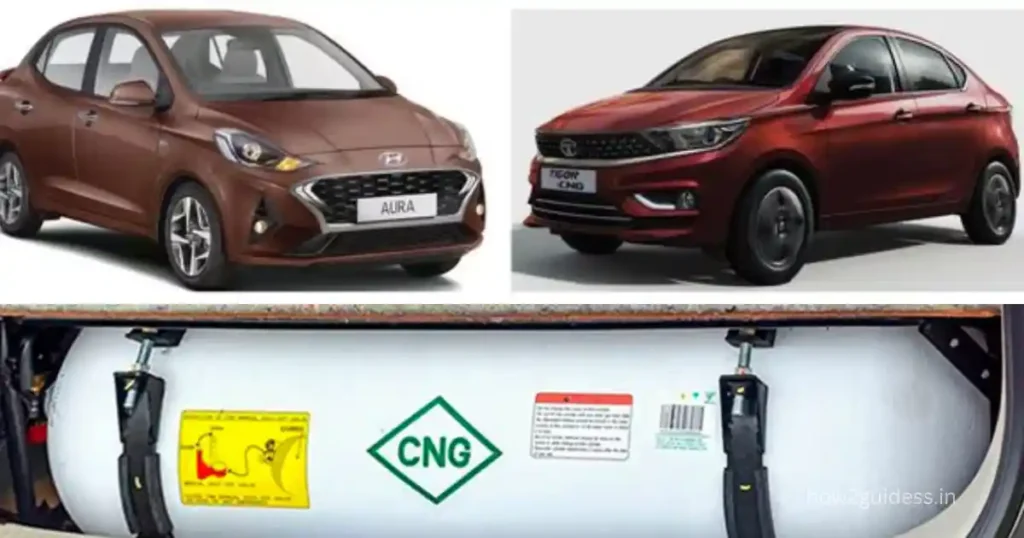
Over the past few years, factory-fitted CNG cars have gained enormous popularity among Indian buyers. The main reason is simple: low running costs without a huge increase in purchase price.
Advantages of CNG Cars
CNG vehicles provide strong financial benefits:
- Significantly lower fuel cost than petrol
- Factory-installed systems with manufacturer warranty
- Lower emissions compared to petrol and diesel
- Payback period usually within two years
For drivers covering around 1,500 km per month, CNG can save ₹3,000–₹4,500 monthly compared to petrol.
Disadvantages of CNG Cars
However, CNG cars also have certain drawbacks:
- Reduced boot space due to cylinder installation
- Lower engine performance compared to petrol
- Limited CNG pump availability in some regions
- Potential waiting time at fuel stations
These limitations are especially noticeable during long road trips or when carrying large luggage.
Who Should Buy CNG Cars?
CNG cars are best suited for buyers who:
- Drive 1,000–2,000 km per month
- Mostly travel within city limits
- Live in cities with strong CNG infrastructure
- Want lower fuel expenses without buying an EV
Cities such as Delhi, Mumbai, Ahmedabad and Pune have excellent CNG networks, making these vehicles particularly attractive for urban commuters.
Electric Vehicles: The Lowest Running Cost

Electric vehicles have rapidly evolved from niche products to mainstream options in India. Improved battery technology and expanding charging networks have made EVs increasingly practical.
Advantages of Electric Cars
Electric vehicles offer several unique advantages:
- Lowest running cost when charged at home
- Minimal maintenance requirements
- Quiet and smooth driving experience
- Zero tailpipe emissions
- Government incentives in some states
A typical EV charged at home costs ₹1–₹1.5 per kilometre, which is far cheaper than petrol or diesel.
Disadvantages of Electric Cars
Despite their benefits, EVs still face some challenges:
- Higher upfront purchase price
- Dependence on charging infrastructure
- Longer charging time compared to refuelling
- Range limitations for long highway trips
Fast charging can also increase running costs to ₹3–₹4 per kilometre, reducing the financial advantage compared to CNG.
Who Should Buy Electric Cars?
EVs make the most sense for buyers who:
- Have home charging access
- Drive predictable city routes
- Cover more than 1,500 km monthly
- Plan to keep the car for five years or more
For such drivers, the long-term savings can offset the higher purchase price within a few years.
Also Read: Mahindra Discounts March 2026: Up to Rs 4 Lakh Off on XUV400, XUV700 & Scorpio Classic
Petrol vs CNG vs EV Full Ownership Comparison
The following table summarises the overall ownership differences between fuel types.
| Factor | Petrol | Diesel | CNG | Electric |
|---|---|---|---|---|
| Purchase Price | Lowest | Higher than petrol | Slightly higher than petrol | Highest |
| Running Cost/km | ₹4.75–₹5.50 | ₹3.60–₹4.20 | ₹2.28–₹2.80 | ₹1–₹1.5 |
| Maintenance | Low | Moderate | Low-Moderate | Lowest |
| Infrastructure | Excellent | Excellent | City dependent | Charging required |
| Boot Space | Full | Full | Reduced | Full |
| Highway Suitability | Excellent | Excellent | Limited | Range dependent |
| City Suitability | Good | Good | Excellent | Excellent |
| Emissions | High | High | Moderate | Zero tailpipe |
Petrol vs CNG vs EV- Which Fuel Type Should You Choose?
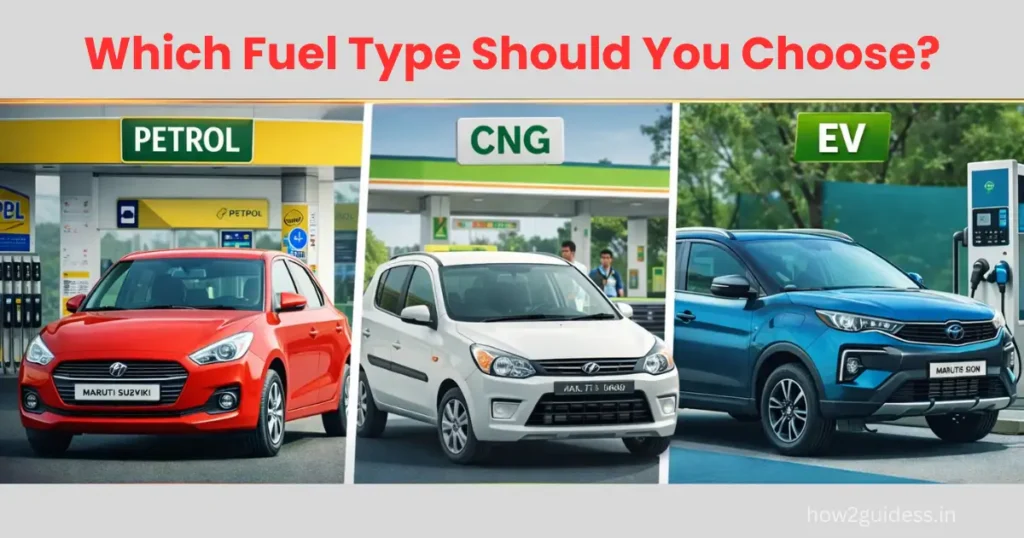
The best choice depends on three simple factors: monthly driving distance, driving environment and charging access.
If You Drive Less Than 10,000 km Per Year
Petrol vehicles remain the most practical option. The savings from CNG or EVs may not justify the higher purchase price.
If You Drive 10,000–20,000 km Per Year
CNG becomes the ideal middle ground. It offers strong running cost savings while maintaining reasonable purchase prices.
If You Drive More Than 20,000 km Per Year
Electric vehicles deliver the maximum long-term savings, especially with home charging.
The Bigger Picture: India’s Changing Fuel Landscape
India’s automotive market is currently undergoing a major transformation. Petrol vehicles still dominate entry-level segments, but alternative fuels are rapidly gaining ground.
CNG adoption is expanding due to government support and growing infrastructure, while EV adoption is accelerating as battery prices gradually decline.
At the same time, stricter emission regulations are shaping the future of diesel vehicles, particularly in metro cities.
For buyers, this means the fuel decision is no longer purely about mileage. It now involves a balance between purchase cost, convenience, infrastructure and long-term savings.
Conclusion: There Is No Universal Winner
In 2026, the debate between Petrol vs CNG vs EV has no single winner. Each fuel type serves a different type of driver.
Electric vehicles deliver the lowest running costs and maintenance, making them ideal for urban commuters with home charging.
CNG offers the best balance of affordability and savings, particularly for city drivers covering moderate distances.
Diesel remains the strongest choice for highway-heavy usage and large SUVs.
Petrol cars continue to be the simplest and most accessible option, especially for low-mileage users.
Ultimately, the smartest choice depends on how you drive, where you live and how long you plan to keep your vehicle. By evaluating these factors carefully, buyers can select the fuel type that truly fits their lifestyle and budget.
Note: Fuel prices, running costs and efficiency figures mentioned are based on estimated 2026 market averages and may vary depending on city fuel prices, driving conditions, vehicle efficiency and charging tariffs.
Also Read: Toyota Urban Cruiser Hyryder Offers March 2026: Benefits Up to Rs 1 Lakh Announced

Raj Prajapati is a senior automobile content writer at How2Guidess.in with over 3 years of experience in auto news, vehicle launches, comparisons, and EV updates. With a background in Computer Science & Engineering, he focuses on research-based, clear, and reader-friendly automobile content.