

Tata Motors January 2026 Sales: Tata Motors began 2026 on a strong note, retailing 70,222 passenger vehicles in January, a 46 percent year-on-year increase over the 48,075 units sold in the same month last year. The company retained its position as India’s second highest-selling carmaker, underlining the scale it has built in the domestic market.
A closer look at the model-wise numbers reveals a clear pattern: SUVs continue to power Tata’s growth, while certain niche and sedan offerings remain under pressure.
Also Read: Tata Motors and Stellantis Sign New MoU as JV Completes 20 Years in India
Model-Wise Performance Snapshot
Below is a breakdown of Tata Motors’ January 2026 sales compared to January 2025:
| Model | Jan 2026 Sales | Jan 2025 Sales | YoY Change |
|---|---|---|---|
| Nexon | 23,365 | 15,397 | +52% |
| Punch | 19,257 | 16,231 | +19% |
| Tiago | 8,349 | 6,807 | +23% |
| Altroz | 3,135 | 2,033 | +54% |
| Tigor | 1,361 | 1,484 | -8% |
| Curvv | 1,666 | 3,087 | -46% |
| Sierra | 7,003 | – | – |
| Harrier | 3,711 | 1,488 | +149% |
| Safari | 2,375 | 1,548 | +53% |
| Total | 70,222 | 48,075 | +46% |
Nexon and Punch: Core Volume Drivers
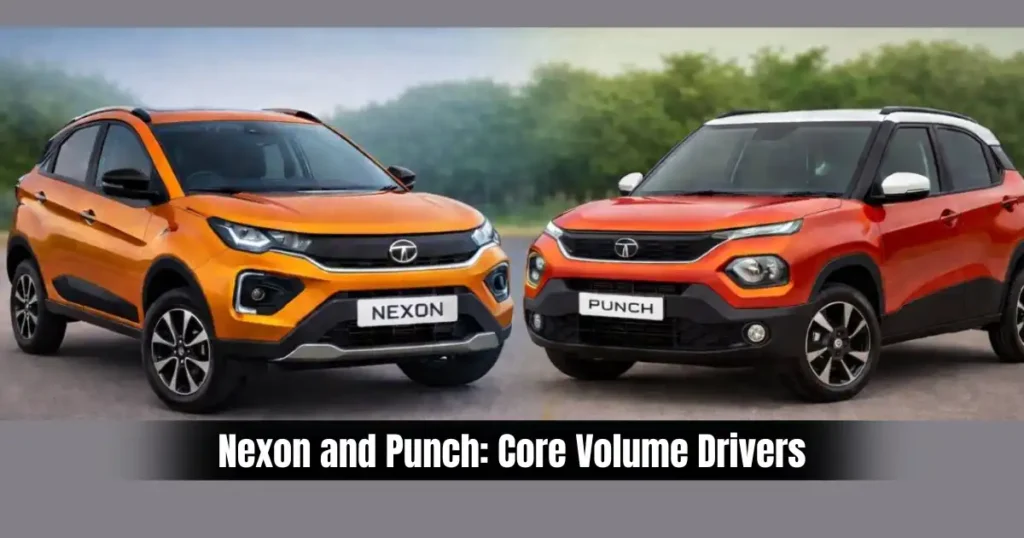
The Tata Nexon continues to anchor the brand’s portfolio. After emerging as India’s highest-selling car in 2025 with over two lakh units delivered, it added 23,365 units in January 2026 alone, marking a 52 percent year-on-year jump. This performance reinforces its position as one of the most consistent nameplates in the compact SUV segment.
The Punch, refreshed recently, contributed 19,257 units, growing 19 percent over January 2025. Together, the Nexon and Punch account for more than 60 percent of Tata’s total monthly volumes. This concentration highlights both the strength and risk of Tata’s strategy, with a heavy reliance on compact SUVs.
For buyers, this indicates continued demand for high-ground-clearance vehicles in the sub-4-metre and entry-SUV segments, where pricing, safety perception and urban practicality converge.
Entry Hatchbacks Show Stability
The Tiago recorded 8,349 units, up 23 percent year-on-year. As Tata’s most affordable offering, it continues to attract first-time buyers and fleet customers.
The Altroz, positioned in the premium hatchback category, saw a sharper 54 percent growth, though volumes remain modest at 3,135 units. This suggests incremental gains in a segment dominated by established rivals, but not yet a structural shift in market share.
The Tigor sedan, however, declined 8 percent to 1,361 units. Its limited scale mirrors the broader trend of shrinking demand for compact sedans in India.
Curvv Slips as Sierra Enters
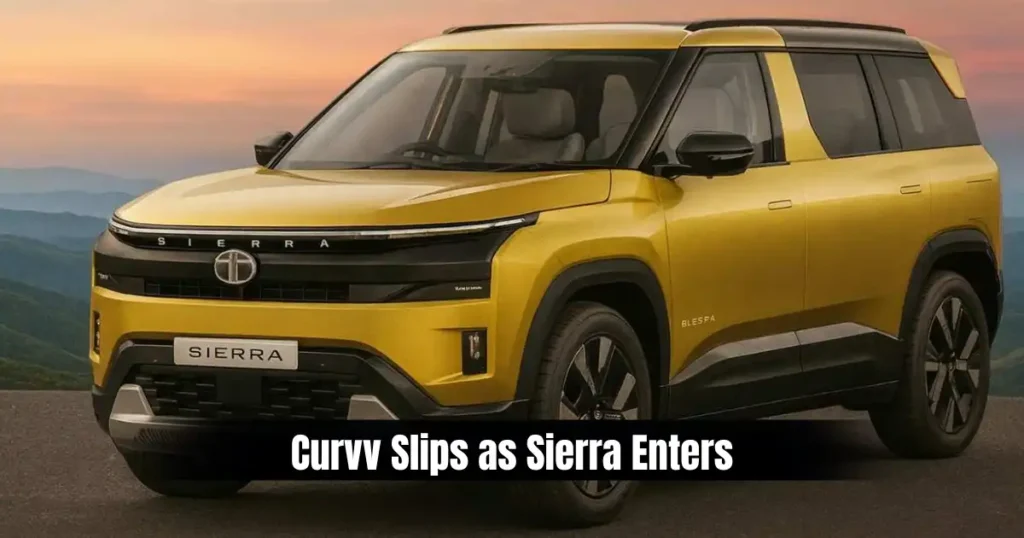
One of the most notable developments is the sharp 46 percent drop in Curvv sales, from 3,087 units last year to 1,666 units in January 2026. Positioned as an SUV-coupe derivative of the Nexon, the Curvv appears to be struggling to carve out a distinct identity within Tata’s own lineup.
At the same time, the newly launched Sierra made an immediate impact with 7,003 units in its first month. Positioned against the Hyundai Creta and other mid-size SUVs, the Sierra’s strong debut suggests pent-up demand for fresh products in the highly competitive C-SUV space.
The contrasting performance of these two models underscores a key lesson: design differentiation alone may not guarantee sustained demand without clear value positioning.
Harrier and Safari Gain Momentum
Tata’s larger SUVs posted strong gains. The Harrier registered 3,711 units, a 149 percent surge over last year’s 1,488 units. The Safari also grew 53 percent to 2,375 units.
A key factor behind this rebound is the availability of petrol variants alongside diesel options. Expanding powertrain choices broadens the customer base, particularly in urban markets where diesel demand has moderated.
For Tata, this strengthens its presence in the mid-size and three-row SUV segments, where higher average selling prices can improve revenue per unit.
SUV-Led Growth: Strategic Implications
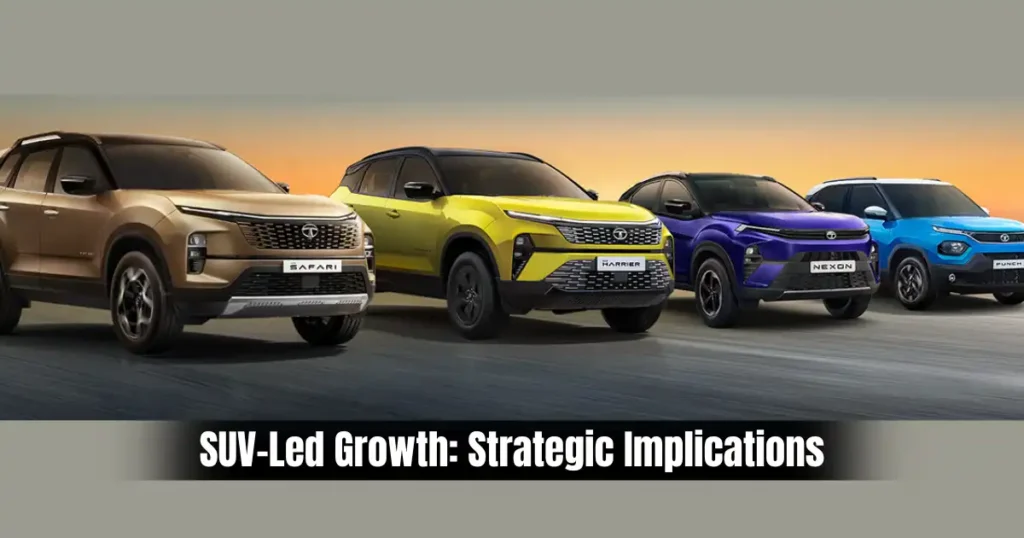
Tata Motors January 2026 Sales numbers reaffirm a structural trend in the Indian market: SUVs are driving volume growth across price bands. Compact and mid-size SUVs now form the backbone of the company’s business.
However, this concentration also raises strategic questions. With Nexon and Punch forming the bulk of sales, any slowdown in these segments could disproportionately affect overall performance. Meanwhile, lower traction for sedans and niche crossovers highlights the need for careful portfolio rationalisation.
From a competitive standpoint, Tata’s broad SUV range allows it to address multiple sub-segments, from entry-level to premium. The successful launch of the Sierra and the resurgence of Harrier and Safari suggest that refreshed products and diversified powertrains can deliver quick results.
What It Means for Buyers
For Indian buyers, Tata’s strong volumes typically translate into better service network support, improved parts availability and potentially stronger resale values. The growing popularity of petrol variants in larger SUVs also reflects changing buyer preferences, particularly in metro cities.
At the same time, the declining performance of certain models signals that customers are increasingly selective, rewarding products that offer clear positioning, features and perceived value.
Looking Ahead- Tata Motors January 2026 Sales
Tata Motors January 2026 Sales performance reflects both momentum and concentration. The company has successfully leveraged India’s SUV boom, while new launches such as the Sierra have strengthened its presence in high-volume segments.
The coming months will reveal whether this growth is sustainable across a broader portfolio or remains heavily dependent on a few key nameplates. In an increasingly competitive market, consistency across segments may prove just as important as headline sales gains.
Disclaimer: Sales figures and analysis in this article are based on manufacturer-released data and publicly available information. Market trends and model performance may vary in subsequent months.
Also Read: Mahindra Nagpur Plant Announced: Rs 15,000 Crore Investment, Production from 2028

Raj Prajapati is a senior automobile content writer at How2Guidess.in with over 3 years of experience in auto news, vehicle launches, comparisons, and EV updates. With a background in Computer Science & Engineering, he focuses on research-based, clear, and reader-friendly automobile content.